Новости МКС

Автор ДмитрийК, 22.12.2005 10:58:03

« назад - далее »

0 Пользователи и 3 гостей просматривают эту тему.

tnt22

https://blogs.nasa.gov/stationreport/2018/10/11/iss-daily-summary-report-10112018/
ЦитироватьISS Daily Summary Report – 10/11/2018

56 Soyuz (56S) Anomaly:
Спойлер
56S launched today at 3:40 AM CDT. At 3:42 AM CDT the Soyuz crew reported that a booster failure had occurred. Per standard response to a booster abort in this timeframe, the descent module separated and performed a ballistic descent and landing near Dzhezkazgan, Kazakhstan. At 4:20 AM CDT, Russian Search and Rescue forces arrived at the landing location after which the crew was safely extracted and transported to Dzhezkazgan via helicopter. They were subsequently transported via fixed wing aircraft to Baikonur, Kazakhstan.
[свернуть]
Team Task Switching (TTS):
Спойлер
The crew completed a TTS survey today. When crewmembers are required to switch their attention between tasks frequently, performance on each of the tasks can be negatively affected. The objective of the TTS investigation is to gain knowledge about whether or not crewmembers have difficulty in switching tasks and determine the impacts of these switches to both reduce any negative consequences and improve individual and team motivation and effectiveness.
[свернуть]
Food Acceptability:
Спойлер
The crew completed the Food Acceptability questionnaires today. This investigation seeks to determine the impact of repetitive consumption of food currently available from the spaceflight food system. Results will be used in developing strategies to improve food system composition to support crew health and performance on long duration missions.
[свернуть]
Myotones:
Спойлер
The crew gathered Myotones Hardware in preparation of upcoming operations. The investigation observes the biochemical properties of muscles during long-term exposure to the spaceflight environment. Results from this investigation are expected to provide insight into principles of human resting muscle tone which could lead to the development of new strategies for alternative treatments for rehabilitation both on Earth and for future space missions.
[свернуть]
Basic Express Rack #10B Locker remove:
Спойлер
Lockers were removed from the newly installed Basic Express Rack (BER) #10B and stowed in new locations. EXpedite the PRocessing of Experiments for Space Station (EXPRESS) Racks are multipurpose payload rack systems that store and support research aboard the ISS. The EXPRESS Racks support science experiments in any discipline by providing structural interfaces, power, data, cooling, water, and other items needed to operate science experiments in space.
[свернуть]
HII Transfer Vehicle (HTV)-7 Cargo Transfer:
Спойлер
The crew continued HTV-7 cargo transfer operations today. Ground specialists estimate approximately 15 hours remain to complete transfer.
[свернуть]

tnt22

https://blogs.nasa.gov/stationreport/2018/10/12/iss-daily-summary-report-10122018/
ЦитироватьISS Daily Summary Report – 10/12/2018

56 Soyuz (56S) Anomaly Follow Up:
Спойлер
Following yesterday's launch anomaly, the 56S crew returned to Moscow after medical evaluations in Baikonur, Kazakhstan. Roscosmos has created an investigative commission to look into the booster anomaly. In addition, Energia has formed a commission to find ways to improve performance and reliability of the Soyuz launch escape system. ISS Increment Teams are actively replanning activities as a result of the launch anomaly.
[свернуть]
HII Transfer Vehicle (HTV)-7 Cargo Transfer:
Спойлер
The crew continued HTV-7 cargo transfer operations today. Ground specialists estimate approximately 10 hours remain to complete transfer.
[свернуть]
Myotones Measurements:
Спойлер
A crewmember performed skin marking and measurements with the Myotones Device. Data was then transferred to the laptop. Myotones investigation observes the biochemical properties of muscles during long-term exposure to the spaceflight environment. Results from this investigation are expected to provide insight into principles of human resting muscle tone, which could lead to the development of new strategies for alternative treatments for rehabilitation both on Earth and for future space missions.
[свернуть]
Sextant Navigation:
Спойлер
The Crew performed the sixth Sextant Navigation session using the Star, planet and Moon Limb sighting. The primary science objective of sighting using the method of lunar distances was fully accomplished. This session also served to rehearse the technique that will be used for Orion lunar navigation. Astronauts onboard the ISS test a hand-held sextant that is intended for use on future Orion exploration missions. The results from this investigation can aid in the development of emergency navigation methods for future manned spacecraft. Historically, Gemini missions in 1965-66 were the first to exercise sextant sightings from a spacecraft. A sextant was built into Apollo vehicles as a navigation backup in case of lost communications.
[свернуть]
Basic Express Rack #10B Locker remove:
Спойлер
Lockers were removed from the newly installed Basic Express Rack 10B and stowed in new locations. EXpedite the PRocessing of Experiments for Space Station (EXPRESS) Racks are multipurpose payload rack systems that store and support research aboard the ISS. The EXPRESS Racks support science experiments in any discipline by providing structural interfaces, power, data, cooling, water, and other items needed to operate science experiments in space.
[свернуть]
Time Perception in Microgravity:
Спойлер
The crew performed a Time perception session. The accurate perception of objects in the environment is a prerequisite for spatial orientation and reliable performance of motor tasks. Time is fundamental to motion perception, sound localization, speech, and fine motor coordination.
[свернуть]
NanoRacks Platform 3 Relocate:
Спойлер
The NanoRacks Platform 3 was relocated from Express Rack 4 to Express Rack 10B. NanoRacks Platforms is a multipurpose research facility on board the ISS. NanoRacks Platforms supports NanoRacks Modules in the CubeSat form factor by providing power and data transfer capabilities to operate investigations in microgravity.
[свернуть]

tnt22

https://blogs.nasa.gov/spacestation/2018/10/15/hague-back-in-houston-station-crew-works-science-and-cargo/
ЦитироватьHague Back in Houston, Station Crew Works Science and Cargo

Mark Garcia
Posted Oct 15, 2018 at 1:11 pm


The International Space Station was orbiting about 256 miles above South Australia when a camera on board the orbital complex captured this celestial view of Earth's atmospheric glow and the Milky Way.

NASA astronaut Nick Hague is safe and sound and back in Houston after last week's mission to the International Space Station was aborted during ascent. Meanwhile, the three orbiting Expedition 57 crew members continue ongoing research, maintenance and cargo packing.
Спойлер
Hague returned to Houston Saturday following his emergency landing shortly after launch in the Soyuz MS-10 spacecraft in Kazakhstan on Thursday. He and fellow Soyuz crew member Alexey Ovchinin were flown back to Moscow after medical checks in Kazakhstan then returned home to their families.

Back in space, two astronauts Flight Engineer Serena Auñón-Chancellor and Commander Alexander Gerst and worked on a variety of life support and science experiments today. The duo also partnered up for cargo operations inside JAXA's (Japan Aerospace Exploration Agency) HTV-7 resupply ship.

Auñón-Chancellor started her day testing the performance of battery life in space for the Zero G Battery Test experiment. Gerst was activating and checking out a life support rack to ensure good carbon dioxide and water management in the device.

Cosmonaut Sergey Prokopyev worked throughout Monday on life support maintenance in the station's Russian segment. The Russian flight engineer also ran on a treadmill in the Zvezda service module for an experiment observing how microgravity impacts exercise.
[свернуть]

tnt22

ЦитироватьExpedition 57 Education Interview with National Park Service

NASA Video

Опубликовано: 15 окт. 2018 г.

Aboard the International Space Station, Expedition 57 Flight Engineer Serena Aunon-Chancellor of NASA discussed life and research on the orbital outpost during an in-flight educational event Oct. 15 with students and officials involved in a National Parks Service event in St. Louis, Missouri. Aunon-Chancellor is in the midst of a six-month mission on the complex.
(26:28 )

tnt22

ЦитироватьSpace Station Science at 17,500 Miles Per Hour

NASA

Опубликовано: 15 окт. 2018 г.

The International Space Station is your orbiting laboratory, and the science being conducted there will help us push farther into deep space, while providing benefits back on Earth. Microgravity unlocks new worlds of discovery.


Science at 17,500 Miles Per Hour

NASA Johnson

Опубликовано: 15 окт. 2018 г.

The International Space Station is a unique scientific platform that enables researchers from all over the world to put their talents to work on innovative experiments in the microgravity environment, which could not be done anywhere else. Although each space station partner has distinct agency goals for station research, each partner shares a unified goal to extend the resulting knowledge for the betterment of humanity. We may not know yet what will be the most important discovery gained from the space station, but we already have some amazing breakthroughs.
(NASA)
(NASA Johnson)
(2:07)

tnt22

ЦитироватьВ "Роскосмосе" рассказали, когда на МКС отправят следующий экипаж
11:52 16.10.2018 (обновлено: 11:54 16.10.2018)

МОСКВА, 16 окт — РИА Новости. Следующий экипаж отправится на Международную космическую станцию в первых числах декабря, заявил исполнительный директор "Роскосмоса" по пилотируемым программам Сергей Крикалев.

Источник сообщил о наличии версии саботажа в расследовании аварии "Союза"
До аварии ракеты "Союз-ФГ" с кораблем "Союз МС-10" запуск следующего корабля планировался 20 декабря.

"Следующий полет планировался в декабре, но мы сейчас будем стараться немного пораньше сделать этот полет — в первых числах декабря полетит тот экипаж, который планировался", —сказал Крикалев телеканалу RT.

По его словам, тот экипаж, который сейчас находится на МКС, там немного задержится для того, чтобы "пересменка была более длинная".


РИА Новости https://ria.ru/space/20181016/1530747287.html

tnt22

https://tass.ru/kosmos/5679154
Цитировать16 ОКТ, 12:26 Обновлено 12:37
Космонавт Овчинин заявил, что на "Союзе" не было критично важных для экипажа МКС грузов

МОСКВА, 16 октября. /ТАСС/. Потерпевший аварию "Союз" не вез для космонавтов МКС критично важных грузов, без которых космонавты не смогли бы работать. Об этом в эфире телеканала "Россия-24" сообщил космонавт Роскосмоса Алексей Овчинин (командир "Союза МС-10" ).

"Грузы у нас находились как в бытовом отсеке, так и в спускаемом аппарате. У нас вместо третьего члена экипажа был грузовой контейнер. Так что часть грузов, которые находились в спускаемом аппарате не утеряны, то, что в бытовом отсеке скорее всего будет утеряно, но там не было ничего такого критического, без чего бы не могли бы работать наши экипажи на борту МКС", - сказал он, отвечая на вопрос, были ли на корабле грузы, которые необходимы космонавтам на МКС.

tnt22

https://blogs.nasa.gov/stationreport/2018/10/15/iss-daily-summary-report-10152018/
ЦитироватьISS Daily Summary Report – 10/15/2018

Binary Colloidal Alloy Test – Cohesive Sediment (BCAT-CS):
Спойлер
Over the Weekend, the crew checked the camera alignment and focus settings by viewing the latest BCAT images on a laptop. BCAT-CS focuses on the study of forces between particles that cluster together by using sediments of quartz and clay particles. Conducting the research in the microgravity environment of the ISS makes it possible to separate the forces acting on the particles over a short range (adhesive forces) versus those acting over a long range (cohesive forces). The quartz/clay system is commonly found in a wide variety of environmental settings (such as rivers, lakes, and oceans) and plays an important role in technological efforts related to deep-sea hydrocarbon drilling and carbon dioxide sequestration
[свернуть]
Loop Heat Pipe Radiator LHPR):
Спойлер
ISS crew reconfigured the cable connection for the JEM Ethernet Extender in preparation for the Loop Heat Pipe Radiator. The LHPR is an advanced two-phase heat transfer device that utilizes the evaporation and condensation of a working fluid to transfer heat, and the capillary force to circulate the fluid. This investigation demonstrates the heat transfer performance/functions under microgravity conditions using the LHPR experimental apparatus, which is grappled by the JEM Remote Manipulator System (JEMRMS). This technology can be applied in the thermal control system of future satellites that generate large amounts of heat that could negatively affect satellite operations.
[свернуть]
Life Support Rack (LSR):
Спойлер
ISS crew continued configuration for the Life Support rack by installing the CO2 absorbers and setup of the Air Water Management System. LSR is a European Space Agency technology demonstrator for closed loop air revitalization. It captures carbon dioxide from cabin air and recovers 50% of its oxygen for use by the astronauts. LSR operates for a minimum of one year on the ISS to demonstrate the robustness of the technology for future Exploration Missions
[свернуть]
Zero-g Battery Testing:
Спойлер
A crewmember completed testing of a sample alkaline batteries. All batteries passed and were restowed for return. Over many years, some crewmembers have reported that batteries on orbit do not last as long as they do on the ground. In the Zero-g Battery Testing experiment, an ISS crew member installs several sets of batteries into a standard camera flash, identifies batteries that fail to work, and returns them to the ground for analysis. If battery life is, in fact, shorter in space, this knowledge could lead to development of better batteries for use in space and on the ground.
[свернуть]
HII Transfer Vehicle (HTV)-7 Cargo Transfer:
Спойлер
The crew continued HTV-7 cargo transfer operations today. Ground specialists estimate approximately ~7 hours remain to complete transfer of identified items.
[свернуть]

tnt22

http://militarynews.ru/story.asp?rid=1&nid=493225
ЦитироватьРоссийские космонавты в середине декабря осмотрят снаружи корабль "Союз МС-09" перед его возвращением на Землю - источник
17.10.2018 2:03:25
 *** Европейский и канадский астронавты дважды выйдут в декабре в открытый космос

Байконур. 17 октября. ИНТЕРФАКС - Выход российских космонавтов в открытый космос с борта Международной космической станции (МКС) перенесен на месяц вперед из-за аварии ракеты "Союз-ФГ" при старте с Байконура, сообщил "Интерфаксу" источник на Байконуре.

"Предполагается, что российские космонавты Олег Кононенко и Сергей Прокопьев выйдут в открытый космос в середине декабря, чтобы осмотреть снаружи корабль "Союз МС-09", в бытовом отсеке которого было обнаружено отверстие", - сказал источник.

Ранее выход в открытый космос предполагался в ноябре. Вместо О.Кононенко в операции должен был участвовать космонавт Алексей Овчинин, однако из-за аварии на старте он не смог попасть на МКС.

Вслед за россиянами в открытый космос с борта МКС выйдут европейский и канадский астронавты.

"Астронавты Александр Герст и Давид Сен-Жак выйдут в открытый космос в декабре дважды. Помимо прочего им предстоит заменить аккумуляторные батареи в системе электропитания", - добавил источник.

Ранее со ссылкой на источник сообщалось, что запуск корабля "Союз МС-11" к МКС может быть осуществлен в период с 28 ноября по 3 декабря.

Корабль "Союз МС-09", в бытовом отсеке которого было обнаружено отверстие, вернется на Землю в конце декабря. "Рассматривается диапазон, начиная с 20 декабря", - сказал источник.

tnt22

ЦитироватьAlexander Gerst‏Подлинная учетная запись @Astro_Alex 11 ч. назад

"The difference between an ordeal and an adventure is attitude." – Bob Bitchin. Despite being temporarily understaffed, Expedition 57 is on its way. Many new experiments are rollin', from medication research to water regeneration to robotics. #horizons @ISS_Research


Старый

Баба вовсе не выглядит утомлённой. Не то что сам Прокопьев.
1. Ангара - единственная в мире новая РН которая хуже старой (с) Старый Ламер
2. Назначение Роскосмоса - не летать в космос а выкачивать из бюджета деньги
3. У Маска ракета длиннее и толще чем у Роскосмоса
4. Чем мрачнее реальность тем ярче бред (с) Старый Ламер

tnt22

https://blogs.nasa.gov/stationreport/2018/10/16/iss-daily-summary-report-10162018/
ЦитироватьISS Daily Summary Report – 10/16/2018

Cold Atom Lab (CAL):
Спойлер
A Crewmember attached the Helium monitor to the front of the CAL hardware to collect readings. The CAL produces clouds of atoms that are chilled to about one ten billionth of a degree above absolute zero — much colder than the average temperature of deep space. At these low temperatures, atoms have almost no motion, allowing scientists to study fundamental behaviors and quantum characteristics that are difficult or impossible to probe at higher temperatures. In microgravity, researchers may be able to achieve even colder temperatures than what is possible on the ground, and observe these cold atom clouds for longer periods of time.
[свернуть]
Lighting Effects:
Спойлер
Crew performed a numerical and color discrimination visual test at a designated location. The Lighting Effects investigation studies the impact of the change from fluorescent light bulbs to solid-state light-emitting diodes (LEDs) with adjustable intensity and color and aims to determine if the new lights can improve crew circadian rhythms, sleep, and cognitive performance.
[свернуть]
Radiation Dosimetry Inside ISS-Neutrons (RADI-N2):
Спойлер
Today the eight detectors were retrieved from NOD3F3 rack front area location and handed back to the Russian crew for data extraction and download. This Canadian Space Agency investigation measures neutron radiation levels in the ISS. These bubble detectors are designed to only detect neutrons and ignore all other radiation.
[свернуть]
BioServe Protein Crystallography (BPC)-1:
Спойлер
A crewmember used pipettes to mix varying viscosity solutions into the crystallization plates. BPC-1 seeks to demonstrate the feasibility of conducting protein crystal growth in real time onboard the ISS. Crewmembers add solutions to the hardware, observe the crystals that form and adjust for follow-on experiments. This approach gives scientists the ability to optimize crystal growth in microgravity instead of waiting for samples to return and then launching them again.
[свернуть]
HII Transfer Vehicle (HTV)7 Cargo Transfer:
Спойлер
The crew continued HTV7 cargo transfer operations today. Ground specialists estimate approximately ~4 hours remain to complete transfer of identified items.
[свернуть]
Extravehicular Mobility Unit (EMU) Li-Ion Battery Data Logging:
Спойлер
Today the crew initiated a charging Auto cycle of two EMU Long Life Batteries (LLB) with data logging. Over the course of three days, the Auto cycle will capture battery health data and help ground experts understand the charge and discharge capacities of these new and improved LLBs. The data will also be used to compare charging system performance between the on-orbit and ground based systems.
[свернуть]

tnt22

ЦитироватьDavid Saint-Jacques explains radiation and presents the Radi-N2 and You project

Canadian Space Agency

Опубликовано: 16 окт. 2018 г.

2018-10-16 - David Saint-Jacques explains radiation, which can pose serious health risks for astronauts on long-duration space missions. While he measures radiation levels aboard the International Space Station as part of the Radi-N2 experiment, the Radi-N2 and You project allows classrooms across Canada to do the same on Earth. (Credit: Canadian Space Agency)
(2:12)

tnt22

. The replay can also be seen on .
[свернуть]

tnt22

ЦитироватьИсточник сообщил, когда численность экипажа МКС вернется к прежнему уровню
07:08 18.10.2018

МОСКВА, 18 окт — РИА Новости. Экипаж Международной космической станции (МКС) после аварии ракеты "Союз-ФГ" вернется к нормальной численности из пяти-шести человек не раньше лета 2019 года, сообщил РИА Новости источник в ракетно-космической отрасли.

"Лишь после стыковки к МКС корабля "Союз МС-13", старт которого намечался по прежнему графику на 23 июля, численность экипажа вновь достигнет шести человек, или пяти, если по каким-либо причинам в экипаже "Союза МС-12" весной будущего года полетят двое, а не трое членов экипажа", — сказал собеседник.

По его словам, два вместо трех космонавтов может отправиться на "Союзе МС-12" в случае, если будет достигнута договоренность провести туристический полет космонавта из ОАЭ осенью 2019 года. Для его возвращения за полгода до полета к МКС должен отправиться корабль с пустым третьим местом, чтобы вернуть того в последующем на Землю. В связи с тем, что руководством Роскосмоса поручено проработать возможность отправить экипаж Алексея Овчинина и Ника Хейга весной 2019 года, именно они могут стать тем экипажем, который вновь отправится вдвоем, пояснил собеседник.

Соответственно, полеты следующих экипажей сместятся по срокам, пояснил собеседник.

До конца года на МКС будет работать экипаж в составе российского космонавта Сергея Прокопьева, европейского астронавта Александра Герста и американского астронавта Серины Ауньен-Чэнселлор. До Нового года они должны вернуться на Землю, поскольку истекут 200 суток эксплуатации их корабля "Союз МС-09". Им на смену в начале декабря отправятся российской космонавт Олег Кононенко, канадский космонавт Давид Сан-Жак и американский астронавт Энн Шарлотт Макклейн. Они будут работать на МКС до апреля-мая.

Старыми планами на 5 апреля 2019 года намечался пуск корабля "Союз МС-12" со следующим экипажем – либо, как планировалось, российским космонавтом Олегом Скрипочка и американский астронавт Кристина Кох, либо новым экипажем — Овчининым и Хейгом. "Высока вероятность, что пуск этого корабля тоже сдвинут, чтобы обеспечить оптимальную смену экипажей на МКС", — рассказал собеседник.

"Но после стыковки корабля "Союз МС-12" к МКС предыдущий экипаж вернётся на Землю и экипаж так и останется из трёх человек до прибытия "Союза МС-13", — пояснил он.


РИА Новости https://ria.ru/science/20181018/1530928140.html

tnt22

ЦитироватьHorizons science – soft matter dynamics

European Space Agency, ESA

Опубликовано: 18 окт. 2018 г.

In the absence of gravity, foams and granular materials stick together for longer. ESA astronaut Alexander Gerst shares how researchers are studying the properties of these materials in space to help innovation on Earth.

ESA's Soft Matter Dynamics experiment was transported to the International Space Station aboard a SpaceX Dragon capsule in June 2018 and installed in the Columbus laboratory on 19 July. It is one of over 50 experiments Alexander has direct involvement with, with many more taking place on board the International Space Station throughout his Horizons mission.

Alexander took over as commander of the International Space Station for Expedition 57 on 3 October 2018.
(2:19)

tnt22

ЦитироватьChris B - NSF‏ @NASASpaceflight 11 мин. назад

FEATURE ARTICLE:

NASA and Roscosmos trying to avoid an empty Space Station -

https://www.nasaspaceflight.com/2018/10/nasa-roscosmos-trying-avoid-empty-space-station/ ...

- Superb work by Thomas Burghardt (@TGMetsFan98)

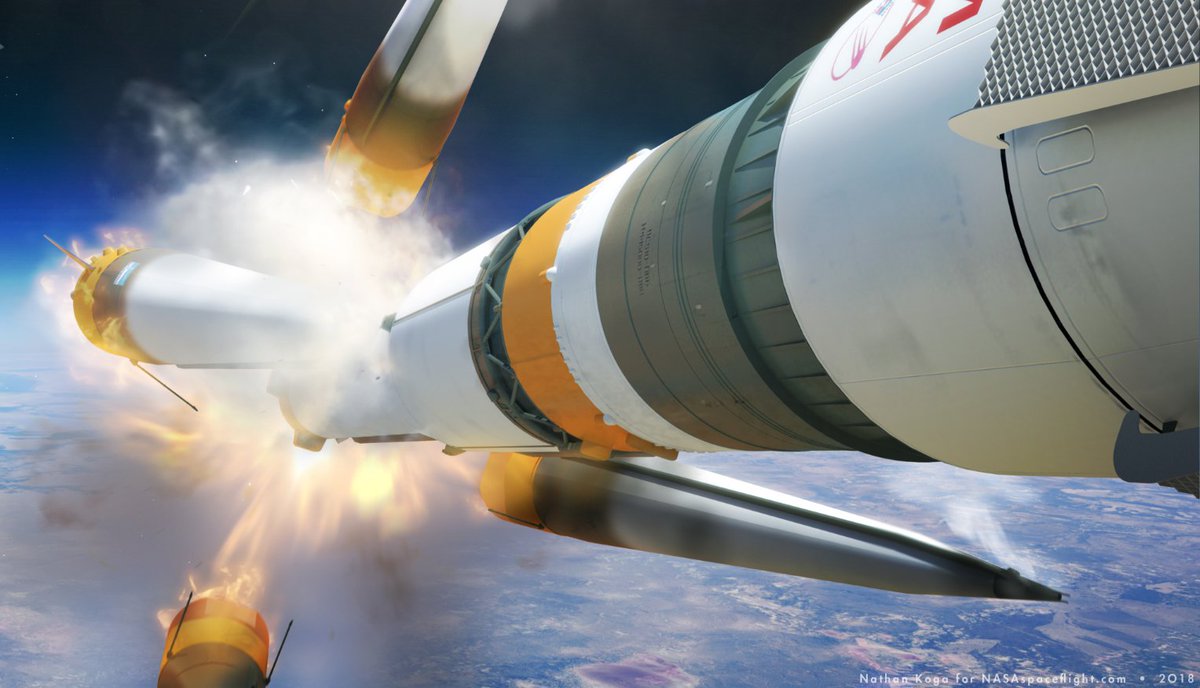
Amazing envisioning of the Soyuz FG booster failure by Nathan Koga (@kogavfx) for NSF/L2.

tnt22

https://blogs.nasa.gov/stationreport/2018/10/17/iss-daily-summary-report-10172018/
ЦитироватьISS Daily Summary Report – 10/17/2018

Binary Colloidal Alloy Test – Cohesive Sediment (BCAT-CS):
Спойлер
The crew checked the camera alignment and focus by viewing the latest BCAT images on a laptop. BCAT-CS focuses on the study of forces between particles that cluster together by using sediments of quartz and clay particles. Conducting the research in the microgravity environment of the ISS makes it possible to separate the forces acting on the particles over a short range (adhesive forces) versus those acting over a long range (cohesive forces). The quartz/clay system is commonly found in a wide variety of environmental settings (such as rivers, lakes, and oceans) and plays an important role in technological efforts related to deep-sea hydrocarbon drilling and carbon dioxide sequestration.
[свернуть]
BioServe Protein Crystallography (BPC)-1:
Спойлер
Crew performed viscosity solutions into Crystallization plates mixing. Plate samples were stowed in the SABL unit. BPC-1 seeks to demonstrate the feasibility of conducting protein crystal growth in real time onboard the ISS. Crewmembers add solutions to the hardware, observe the crystals that form and adjust for follow-on experiments. This approach gives scientists the ability to optimize crystal growth in microgravity instead of waiting for samples to return and then launching them again.
[свернуть]
JAXA Low Temperature Protein Crystal Growth (LT PCG):
Спойлер
Ice packs were placed into the Freezer-Refrigerator Of STirling cycle (FROST)-2 unit in preparation for LT PCG4 samples that will eventually be transferred to the HTV Small Return Capsule (HSRC). The goal of the JAXA LT PCG experiment is to produce high quality protein crystals in a microgravity environment at a low temperature.
[свернуть]
Waste and Hygiene Compartment (WHC) Pre-Treat Tank Remove and Replace (R&R):
Спойлер
Today the crew R&R'd the Pre-Treat Tank as part of nominal WHC preventative maintenance. During the activity, the crew discovered pretreat liquid that had leaked into the containment hose connected to the vent caps on the new tank. The leaking tank was bagged and stowed and an alternate tank was subsequently used to complete the R&R. Each tank contains five liters of pre-treat solution, a mix of acid, chromium oxide, and water, used for toilet flushing and required for nominal WHC operation.
[свернуть]
LAB 1 Port 1 (LAB1P1) Pivot Fitting Swap:
Спойлер
During installation of the Life Support Rack (LSR) on October 1, the Active Rack Isolation System (ARIS) pivot brackets were removed from LAB1P1 and replaced with Ishikawajima-Harima Heavy Industries [IHI] style pivot brackets. However, when the crew attempted to re-reinstall an area smoke detector, a 1 cm interference between the smoke detector mounting plate and the new IHI pivot bracket was reported. Today, the crew removed the IHI pivot bracket and replaced it with outside-style ARIS pivot fittings. This eliminated interference between the pivot fitting and the smoke detector bracket.
[свернуть]
System Operations Data File (SODF) Warning Book Updates:
Спойлер
The crew printed and incorporated updates to Warning procedure books today. The changes are required in support of Life Support Rack activation, expected early November.
[свернуть]
Advanced Resistive Exercise Device (ARED) Quarterly Maintenance:
Спойлер
The crew completed ARED quarterly maintenance, which includes steps to inspect the x-rotation dashpots, cycle the main arm through the full range of motion and grease ARED Vibration Isolation System (VIS) rails and rollers.
[свернуть]

tnt22

https://blogs.nasa.gov/spacestation/2018/10/18/liquid-and-flame-science-work-amid-japanese-russian-maintenance/
ЦитироватьLiquid and Flame Science Work amid Japanese, Russian Maintenance

Mark Garcia
Posted Oct 18, 2018 at 6:44 pm


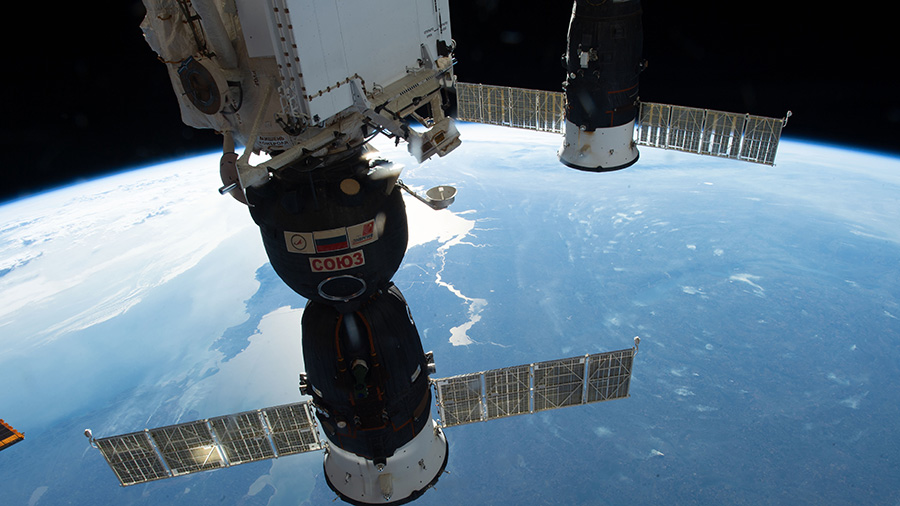
Two Russian spacecraft, the Soyuz MS-09 crew ship (foreground) and the Progress 70 resupply ship, are pictured docked to the International Space Station as the orbital complex orbited nearly 257 miles above Ukraine.

Two Expedition 57 astronauts are working to understand what happens to fluids being transported by spacecraft today. Another crew member also worked on combustion science gear as well as Japanese and Russian systems.
Спойлер
Fluid physics and combustion research on the International Space Station helps scientists understand how well-known phenomena on Earth behaves in microgravity. For instance, fluids sloshing around inside fuel tanks can impact how a spaceship steers in space. The way flames burn and create soot in space can also create safety issues for crews.

Flight Engineer Serena Auñón-Chancellor and Commander Alexander Gerst of ESA (European Space Agency) explored how fluids affect spacecraft maneuvers today. The duo set up a pair of tiny mobile satellites known as SPHERES for the test inside Japan's Kibo lab module. The SPHERES Tether Slosh experiment is observing what happens when the satellites tow a liquid-filled tank versus a solid mass body with a Kevlar tether.

Sergey Prokopyev of Roscosmos opened up the Combustion Integrated Rack in the afternoon and replaced manifold bottles that contain gases for flame experiments. The flight engineer also packed items for disposal on a Japanese cargo ship and checked on Russian ventilation and air conditioning systems
[свернуть]

tnt22

ЦитироватьSpace to Ground: A Successful Failure: 10/19/2018

NASA Johnson

Опубликовано: 19 окт. 2018 г.
(2:00)